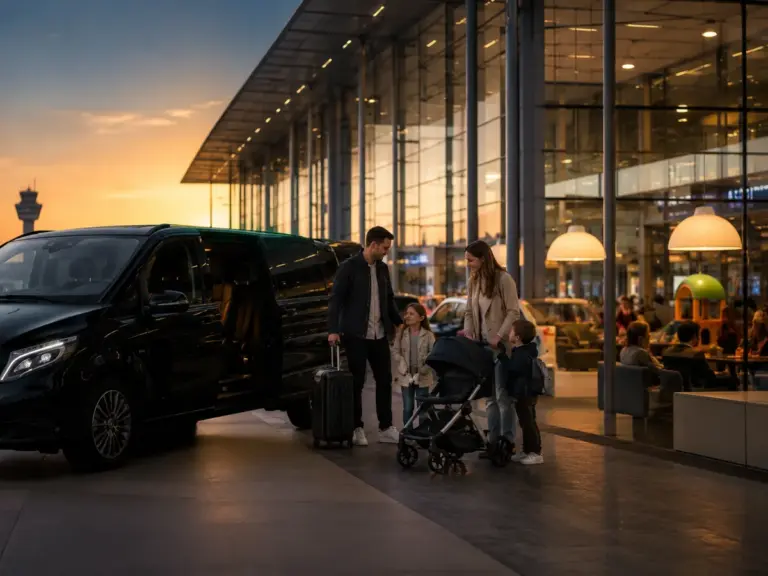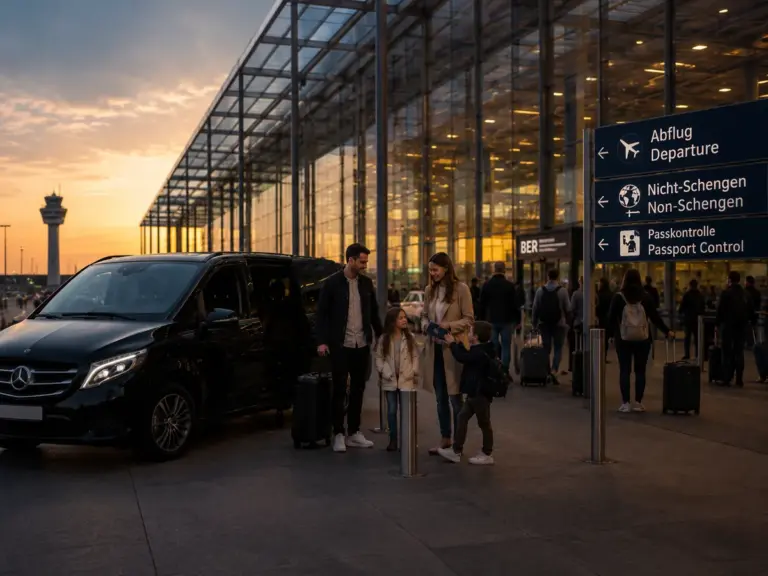
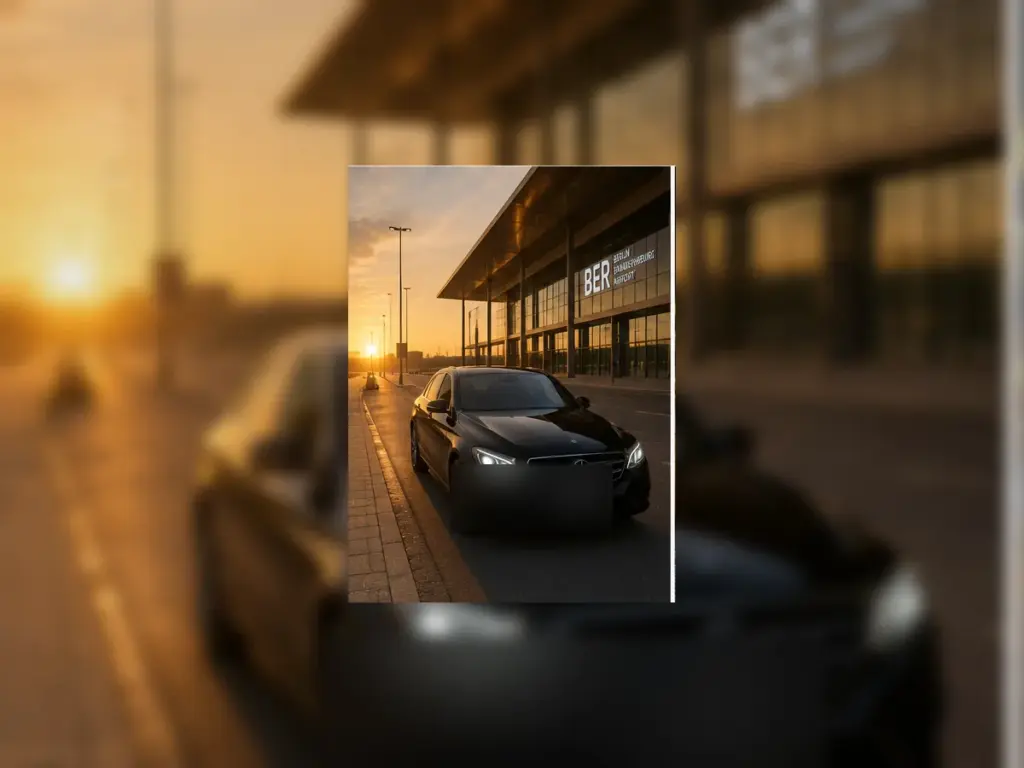
A transfer from Berlin to Munich is a long-distance trip, not a short city ride. The journey is usually around 580–590 km by road and can take most of the day once pickup, traffic, rest stops and arrival planning are included.
For many travellers, the train is the better choice between Berlin and Munich. A private transfer becomes useful when the trip is not just about moving one person from one station to another. It can make sense for families, business guests, groups, passengers with luggage, direct hotel-to-hotel travel or routes with stops on the way.
This guide explains what to consider before booking a Berlin to Munich transfer, how it compares with train travel and what details should be confirmed before the trip.
Quick Overview: Berlin to Munich Transfer
| Question | What to know |
|---|---|
| Is Berlin to Munich a short transfer? | No. It is a long-distance route of roughly 580–590 km by road. |
| Is a private transfer faster than the train? | Usually not. Fast trains can be quicker between city centres. |
| When does a transfer make sense? | When door-to-door travel, luggage, privacy, stops or group coordination matter. |
| Which vehicle is better? | A sedan can work for one or two passengers; a minivan is better for groups and luggage. |
| What should be confirmed? | Pickup time, route, stops, luggage, passengers, vehicle class and waiting time. |
How Far Is Berlin from Munich?
Berlin and Munich are two of Germany’s most important cities, but they are far apart. By road, the distance is usually around 580–590 km depending on the route and exact addresses.
This means the trip should be treated as a long-distance transfer. It is not comparable to a transfer from BER Airport to central Berlin or a short ride between city districts.
The actual travel time depends on traffic, weather, roadworks, rest stops, pickup location and drop-off location. Even if the route looks simple on a map, the real travel day can be longer than expected.
Private Transfer vs Train
For many travellers, the train is the most efficient way to travel between Berlin and Munich. Fast rail connections can take passengers from city centre to city centre without road traffic.
A private transfer is not usually chosen because it is faster. It is chosen because it offers a different type of journey: direct pickup, direct drop-off, privacy, luggage space and flexibility for stops or special travel needs.
Choose the train if:
- you travel alone or as a couple;
- you have light luggage;
- your destination is close to the main station;
- you want the fastest city-centre connection;
- you do not need door-to-door travel.
Choose a private transfer if:
- you travel with children or elderly passengers;
- you have several suitcases or bulky luggage;
- you need hotel-to-hotel or address-to-address travel;
- you want privacy during the trip;
- you need stops on the way;
- you travel as a group;
- you have a business schedule that requires direct routing.
When a Berlin to Munich Private Transfer Makes Sense
A private long-distance transfer makes sense when the trip has practical requirements that public transport does not solve well.
For example, a family with children, strollers and luggage may prefer one direct vehicle instead of train platforms, station changes and taxi rides at both ends. A business group may prefer to travel together and continue working privately during the journey.
A private transfer can also be useful when the pickup or destination is not close to a main station. If the real journey involves hotel pickup, luggage handling, a station transfer and another taxi in Munich, door-to-door transport may become more practical.
Who Should Consider This Route by Private Vehicle?
A Berlin to Munich transfer is most relevant for:
- families with children;
- groups of passengers travelling together;
- business guests or delegations;
- travellers with several large suitcases;
- passengers with bulky items or equipment;
- people who need intermediate stops;
- hotel-to-hotel travel;
- travellers who prefer privacy over public transport.
It is less suitable for a solo traveller with hand luggage who simply needs the fastest route between Berlin and Munich city centres.
Vehicle Choice: Sedan or Minivan?
Vehicle choice is important on a route this long. A car that feels acceptable for a 30-minute airport transfer may feel too small for several hours on the road.
A sedan can be suitable for:
- one or two passengers;
- light luggage;
- business travel with a simple route;
- passengers who do not need extra space.
A minivan is usually better for:
- families;
- groups of three or more with luggage;
- several large suitcases;
- child seats;
- strollers or bulky items;
- long-distance comfort.
For this route, it is better to choose the vehicle by comfort and luggage, not only by seat count.
Luggage Planning
Luggage can decide whether the transfer is comfortable or stressful. Long-distance trips often include more luggage than a city transfer, especially for families or international visitors.
Before confirming the trip, count:
- large suitcases;
- cabin bags;
- backpacks;
- strollers;
- child seats brought from home;
- sports equipment;
- business materials;
- shopping bags or extra items.
If luggage is close to the vehicle limit, choose a larger vehicle. A long road trip should not begin with bags placed uncomfortably around passengers.
Stops on the Way
One advantage of a private transfer is the ability to plan stops. On a long route, this can be important for children, elderly passengers or business travellers who need breaks.
Possible stops may include:
- restroom breaks;
- coffee or meal stops;
- child-care breaks;
- pickup of an additional passenger;
- drop-off at an intermediate address;
- a planned stop in another city.
Stops should be discussed before the trip. Extra stops can affect total travel time and price, especially if they require detours from the main route.
Business Travel Between Berlin and Munich
Berlin and Munich are both important business cities. For business travellers, a private transfer can be useful when the journey needs privacy, direct routing and predictable pickup details.
A car or minivan can allow guests to travel from office to hotel, from hotel to meeting venue or from one event location to another without station changes.
This may be useful for delegations, executives, production teams, event guests or travellers carrying business equipment. The advantage is not speed compared with the train, but control over the route and schedule.
Family Travel Between Berlin and Munich
Families should consider more than distance and price. Children may need breaks, child seats, snacks, toilet stops and extra luggage space.
For a family with babies or toddlers, a private transfer can be more predictable than moving through stations with suitcases and strollers. The vehicle can be prepared for the child seat request, and the family can stay together for the full journey.
However, families should also be realistic about the length of the road trip. The journey is long, and children may need planned breaks.
Airport, Hotel and Address-to-Address Transfers
The route does not always start or end in the city centre. Some passengers need pickup from BER Airport, a Berlin hotel, an apartment, an office or a private address. In Munich, the destination may be a hotel, office, event venue, airport or residential address.
This is where private transport can be useful. A private transfer in Berlin can be arranged around the exact pickup and drop-off addresses, which can reduce the need for extra taxis, station transfers or luggage handling at both ends.
For address-to-address travel, provide the full address, entrance details and any access restrictions before the trip.
Price and Booking Details
A Berlin to Munich private transfer will normally cost more than a train ticket for one passenger. This is expected because it includes a dedicated vehicle, driver time, fuel, long-distance routing and the return logistics of the vehicle.
The final price depends on:
- exact pickup and drop-off addresses;
- vehicle class;
- passenger count;
- luggage amount;
- planned stops;
- waiting time;
- one-way or return arrangement;
- travel date and time.
For a route this long, the price should be confirmed before the trip. Passengers should also confirm what is included and what would count as an extra stop or change.
Departure Time Planning
Departure time matters. Leaving Berlin during morning or evening traffic can add time before the car even reaches the open road.
For long-distance transfers, it is better to allow a buffer. This is especially important if the trip ends with a meeting, flight, train connection, event or hotel check-in deadline.
If the transfer has a fixed arrival requirement, share that requirement before the quote is confirmed. The pickup time should be planned backwards from the required arrival time, not guessed casually.
What to Confirm Before the Trip
Before confirming a Berlin to Munich transfer, check the following:
- exact pickup address in Berlin;
- exact drop-off address in Munich;
- pickup date and time;
- required arrival time, if any;
- number of passengers;
- luggage amount;
- child seat requirements;
- planned stops;
- vehicle type;
- price and included waiting time;
- contact phone number for the travel day.
Clear information before the trip is more important on long-distance routes than on short local transfers. Small misunderstandings can become large delays when the journey is several hundred kilometres.
When the Train Is the Better Choice
The train is often the better choice when the journey is simple. If you are travelling from central Berlin to central Munich with light luggage, the train can be faster, cheaper and less tiring.
It is also more practical for passengers who do not need privacy, extra luggage space or address-to-address travel.
Private transfer should not be presented as the best option for every Berlin to Munich trip. It is best when the passenger’s real needs make door-to-door travel more valuable than speed alone.
When a Private Transfer Is the Better Choice
A private transfer is better when the full journey matters more than just the city-centre travel time.
It can be the better option if:
- you need pickup and drop-off at exact addresses;
- you have several passengers;
- you have luggage that is difficult to manage on trains;
- you need child seats;
- you need stops on the route;
- you want privacy;
- you are arranging transport for guests or clients;
- the trip is part of a business or event schedule.
The right choice depends on the whole travel situation, not only on the distance between the two cities.
Final Advice Before Booking
Before booking a Berlin to Munich transfer, compare the full journey, not only the headline travel time. Consider how you will get to the station, how much luggage you have, who is travelling and whether you need stops or direct address-to-address transport.
For simple city-centre travel, the train is often the stronger option. For families, groups, business guests, luggage-heavy trips or direct hotel-to-hotel travel, a private transfer can be more practical.
The best decision is the one that matches the real trip: passengers, luggage, timing, addresses, comfort needs and flexibility.
Frequently Asked Questions
How far is Berlin from Munich by road?
The road distance is usually around 580–590 km, depending on the exact route and pickup or drop-off address.
Is a private transfer from Berlin to Munich faster than the train?
Usually no. Fast trains can be quicker between city centres. A private transfer is mainly useful for door-to-door travel, luggage, privacy, groups and planned stops.
When should I choose a private transfer instead of the train?
Choose a private transfer from Berlin if you need exact address pickup, child seats, luggage space, privacy, group travel or stops along the way.
Which vehicle is best for Berlin to Munich?
A sedan can work for one or two passengers with light luggage. A minivan is usually better for families, groups, child seats or several suitcases.
Can a Berlin to Munich transfer include stops?
Yes, stops can usually be planned, but they should be agreed before the trip because they can affect the route, travel time and price.