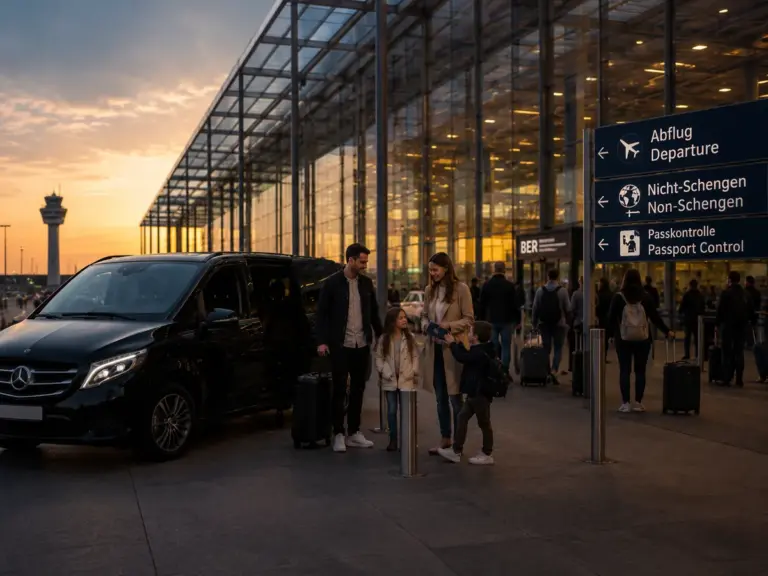

BER Airport customs can be relevant when you arrive from outside the European Union, travel with high-value goods, carry commercial items, transport restricted products, need a VAT refund stamp or carry larger amounts of cash. For many passengers, customs is quick. For others, it can add time after baggage claim or before departure.
This BER Airport customs guide explains when customs may matter, what passengers should prepare, how customs differs from passport control and security, why cash and goods declarations are important, and how customs checks can affect airport pickup, hotel arrival and onward transfer timing.
Important: customs rules depend on your route, residence, goods, value, age, purpose of travel and current law. This article is general passenger guidance, not legal advice. Always check current official customs requirements before travelling.
BER Airport customs at a glance
- Airport: Berlin Brandenburg Airport Willy Brandt
- IATA code: BER
- Main customs topics: goods, cash, tax-free export confirmation, restricted items and duties
- Arrival relevance: after baggage claim for passengers entering Germany with goods
- Departure relevance: VAT refund export confirmation and selected goods checks
- Cash rule: cash or equivalent means worth 10,000 EUR or more can require declaration
- Transfer tip: add time if you need customs, VAT refund or baggage inspection
Customs is not the same as passport control
Passengers often confuse customs with passport control. Passport control checks people and travel documents. Customs checks goods, luggage, commercial items, restricted products, cash declarations, duties and tax matters.
At BER, a non-Schengen arrival may involve passport control first, then baggage claim, then customs-related steps if required. A passenger can clear passport control quickly but still need time for baggage and customs.
For border-control planning, see Passport Control at BER Airport. For EES and ETIAS planning, see EES and ETIAS at BER Airport.
Customs is not the same as security control
Security control is mainly about aviation safety before departure. It checks passengers and hand luggage before access to the secure departure area. Customs is different: it deals with goods crossing borders, duties, taxes and declarations.
A passenger may pass security without problems but still need customs for tax-free export confirmation, unusual goods or special questions. On arrival, customs comes after baggage claim rather than before the flight.
For security planning, see BER Airport Security Control.
When customs matters on arrival at BER
Customs may matter when you arrive at BER from outside the European Union or bring goods that exceed permitted allowances, are intended for commercial use, are restricted, or need to be declared. It can also matter if you carry large amounts of cash or equivalent means.
Many private travellers with normal personal luggage and goods within allowances pass through without a long process. However, passengers with high-value purchases, multiple new items, professional equipment, food products, alcohol, tobacco or commercial samples should check the rules before travelling.
For the arrival process, see BER Airport Arrivals Guide and BER Airport Baggage Claim Guide.
Travellers’ allowances
Travellers entering Germany from non-EU countries can bring certain goods for personal use within allowances. The exact limits depend on the goods, passenger age, transport type and current customs rules. For air travellers, the general allowance for other goods can be up to 430 EUR, while lower limits can apply to younger travellers or different travel modes.
These allowances do not mean that every item is automatically permitted. Some goods are restricted or prohibited, and some categories have special quantity limits. If you are unsure, declare the goods or ask customs before leaving the customs area.
Cash and equivalent means of payment
Cash rules are important. Travellers entering Germany from a non-EU country with cash or equivalent means worth 10,000 EUR or more may need to declare it. This can include cash money and certain securities or equivalent payment means.
If you carry large amounts of cash, do not treat it as a minor detail. Prepare documentation and allow time. Failure to declare when required can lead to serious problems, delays or penalties.
Restricted and prohibited items
Some goods can be restricted or prohibited. This can include certain food products, plants, animals, medicines, protected species, weapons, counterfeit goods and commercial goods. Rules can depend on quantity, origin, documentation and intended use.
Do not assume that an item is allowed because it was accepted by airline baggage or security. Airline baggage rules, aviation security rules and customs rules are separate systems.
Commercial goods and professional equipment
Customs can become more complex if you travel with commercial goods, samples, merchandise, professional tools or expensive equipment. A suitcase full of identical new products can be treated differently from personal clothing and normal travel items.
Business travellers should prepare invoices, ownership proof, serial numbers, temporary import/export documents if relevant and a clear explanation of the purpose of the goods. This is especially important for trade fairs, film equipment, music equipment, medical equipment or technical tools.
VAT refund and tax-free shopping
Travellers residing outside the European Union may be able to obtain VAT refund confirmation for eligible purchases before leaving Germany. The goods, invoices and travel documents may need to be presented to customs before departure.
Timing is important. If goods are in checked baggage, customs confirmation may need to happen before the baggage is handed over. If goods are in hand luggage, the process may be different after security. Passengers should check the exact airport procedure before travel and allow extra time.
Customs before departure from BER
Departing passengers may need customs before check-in, after check-in or after security depending on the issue. VAT refund, export confirmation, commercial goods or special documents can add time before the flight.
Do not arrive at the airport at the last minute if you need customs. The normal departure process already includes check-in, baggage drop, security control and gate walking. Customs can add another step.
For departure planning, see BER Airport Departures Guide and BER Airport Check-in Guide.
Customs after arrival and baggage claim
On arrival, customs-related decisions usually happen after baggage claim. This is why luggage timing matters. If your suitcase is delayed, damaged or missing, customs and baggage processes can become linked because you may not have all goods with you.
If baggage is missing, keep your baggage report and reference number. If the bag contains goods that may be relevant for customs, ask the airline or customs how to handle the situation properly.
For baggage problems, see BER Airport Lost Luggage Guide.
Customs and Terminal 1 / Terminal 2
Terminal layout can affect how quickly passengers reach customs, baggage claim, arrivals or check-in. Terminal 1 is the main airport orientation point, and Terminal 2 is connected by a walking route. The exact process depends on airline, route and terminal.
If you are meeting a passenger, confirm the terminal and allow time for baggage and customs. If the passenger says they are “through passport control,” they may still need baggage claim or customs before reaching the public area.
For terminal planning, see BER Airport Terminal 1 Guide and BER Airport Terminal 2 Guide.
Customs and airport pickup timing
Customs can change pickup timing. A passenger may land on time but still need passport control, baggage claim, customs declaration, questions about goods or cash, and walking to the meeting point.
If you book pickup from BER, share the flight number and tell the driver if you expect customs delays. This is especially important for non-EU arrivals, business equipment, high-value goods, large amounts of luggage or late-night flights.
For pickup from the airport, see Transfer from BER Airport. For the main airport service overview, see Airport Transfers from BER Airport.
Customs and late-night arrivals
Late-night customs issues can be more stressful because passengers are tired, onward transport may be less convenient and hotels may have late check-in rules. If you need to declare goods or solve a baggage problem, the airport exit time can move later than planned.
For late arrivals, keep your phone charged, documents accessible and pickup contact updated. Do not promise an exact meeting time until you know whether passport control, baggage and customs are complete.
For late-night planning, see Late-Night Arrival at BER Airport.
Customs and airport hotels
If you stay near BER after arrival, customs timing can affect hotel check-in. A terminal-area hotel is convenient, but you still need to complete arrival formalities before leaving the controlled area.
If you are travelling with goods that may need customs or with delayed baggage, give the hotel accurate timing and delivery information. Keep receipts and case references if baggage or goods are involved.
For accommodation planning, see BER Airport Hotels Guide.
Customs and parking
If someone is waiting for you by car, customs delays can make parking more expensive or inconvenient. The driver should not enter a short-term parking area too early if your route includes passport control, baggage claim and customs.
For pickup by car, send updates after landing, after baggage claim and when you are ready to exit. This helps the driver choose the right timing.
For parking planning, see BER Airport Parking Guide.
Documents to keep accessible
- Passport or ID document.
- Boarding pass and flight information.
- Receipts and invoices for high-value goods.
- Tax-free documents if relevant.
- Proof of ownership for expensive equipment.
- Medical documentation for special medicines if relevant.
- Baggage tags and baggage reports if luggage is delayed or damaged.
- Cash declaration documents if required.
Common customs mistakes at BER
- Confusing passport control with customs.
- Assuming goods are allowed because airline baggage accepted them.
- Not checking allowances before travelling from a non-EU country.
- Carrying high-value goods without receipts or proof.
- Forgetting the 10,000 EUR cash declaration threshold.
- Leaving VAT refund steps until the last minute.
- Putting tax-free goods into checked baggage before getting required confirmation.
- Planning airport pickup based only on landing time.
BER customs checklist
- Check whether your route is EU or non-EU for customs purposes.
- Review allowances before packing goods.
- Prepare receipts for valuable purchases.
- Declare cash or equivalent means if required.
- Check restrictions for food, medicine, plants, animals and special goods.
- Allow extra time for VAT refund or export confirmation.
- Keep documents accessible until you leave the airport process.
- Update your driver if customs or baggage delays affect pickup time.
FAQ
Is customs the same as passport control at BER?
No. Passport control checks people and travel documents. Customs checks goods, cash, duties, taxes, declarations and restricted items.
Do all passengers need customs at BER?
All passengers must follow customs rules, but not everyone needs a long customs process. It depends on route, goods, value, cash, restrictions and whether something must be declared.
What is the cash declaration threshold?
Travellers entering Germany from a non-EU country with cash or equivalent means worth 10,000 EUR or more may need to declare it to customs.
Can customs delay airport pickup?
Yes. Customs questions, baggage inspection, VAT refund, cash declaration or missing baggage can add time after landing and before the passenger reaches the public arrivals area.
Should I arrive earlier if I need VAT refund confirmation?
Yes. VAT refund or export confirmation can add time before departure, especially if goods are in checked baggage or if queues are longer than expected.
Plan your BER transfer with customs timing in mind
If your route or luggage may involve customs, plan your airport transfer with a realistic time buffer. For pickup from BER or drop-off before departure, use online booking to arrange the route, vehicle and pickup details in advance.