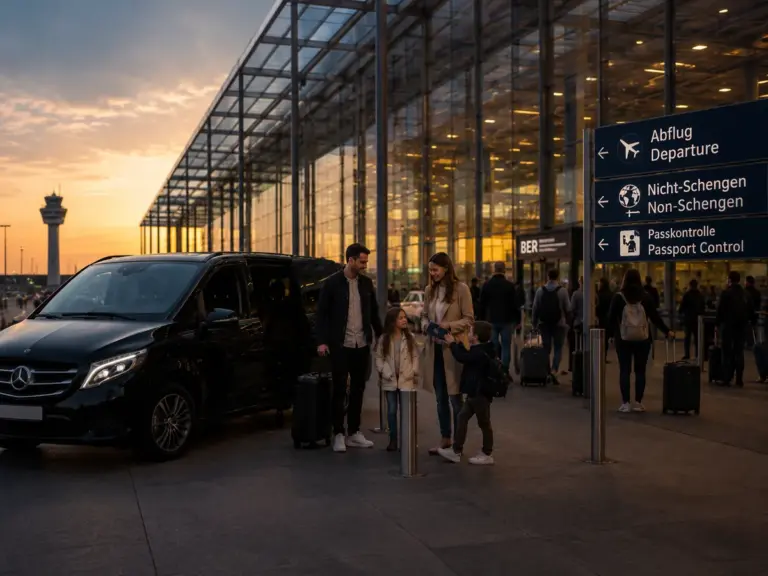
BER Airport transport is one of the most important parts of planning a trip to or from Berlin Brandenburg Airport. Passengers can use trains, S-Bahn, regional rail, buses, intercity coaches, taxis, ride-app pickup, rental cars, parking, hotel transfers and private airport transfers. The best option depends on terminal, luggage, time of day, flight status, group size, mobility needs and final destination.
This BER Airport Transport Guide explains how transport works around Terminal 1 and Terminal 2, how to think about trains, buses, taxis, ride-app pickup, parking and private transfers, and how transport timing connects with arrivals, departures, baggage, passport control, delays and hotels.
Important: routes, platforms, bus stops, taxi areas, pickup zones, travel times, prices, tickets and road conditions can change. Always check current airport and transport information before relying on a specific connection.
BER Airport transport at a glance
- Airport: Berlin Brandenburg Airport Willy Brandt
- IATA code: BER
- Main terminals: Terminal 1 and Terminal 2
- Main transport hub: airport railway station under Terminal 1
- Public transport: Airport Express, regional trains, S-Bahn and buses
- Road transport: taxi, ride-app pickup, private transfer, car rental and parking
- Key planning point: transport timing must include baggage, passport control, terminal walking and flight status
How transport works at BER
BER transport is centred around Terminal 1. The railway station is located below Terminal 1, taxi ranks and pickup areas are connected with Terminal 1 levels, and car access to the terminals is arranged around the main airport approach roads and parking areas.
Terminal 2 is within walking distance of Terminal 1, but it does not work like a separate remote airport. Passengers using Terminal 2 still need to understand the route between Terminal 2, Terminal 1, the train station, taxi areas, parking and pickup points.
For terminal orientation, see BER Airport Terminal 1 Guide, BER Airport Terminal 2 Guide and BER Terminal 1 vs Terminal 2.
Transport from Terminal 1
Terminal 1 is the easiest terminal for understanding BER transport because it is directly connected with the airport railway station, taxi ranks, pickup routes, parking and many passenger services.
Arriving passengers normally leave through arrivals, collect luggage if needed, pass customs where relevant, then move toward train, taxi, pickup, parking or transfer meeting points. Departing passengers move from road, rail or bus arrival areas toward check-in, baggage drop and security.
For arrival and departure basics, see BER Airport Arrivals Guide and BER Airport Departures Guide.
Transport from Terminal 2
Terminal 2 passengers should allow walking time between Terminal 2 and the wider Terminal 1 transport system. This matters when arriving by train, taking a taxi, using parking or meeting a driver.
If you fly from Terminal 2, do not plan transport timing as if the train station, taxi rank or parking exit is directly at your check-in desk. Add time for walking, signs, lifts, luggage and family or mobility needs.
Train transport at BER
Train transport is one of the main ways to travel between BER and Berlin. The airport railway station is under Terminal 1 and connects passengers with Airport Express, regional trains, S-Bahn and selected long-distance rail services.
Train transport can be efficient for solo travellers, passengers with light luggage and people going to areas well connected by rail. It can be less convenient for families, large luggage, late arrivals, business travellers with equipment or passengers whose final address is far from a station.
For rail station orientation, see BER Airport Train Station Guide.
Airport Express and regional trains
Airport Express and regional trains connect BER with central Berlin and other regional destinations. These trains can be faster than road transport when the destination is near a suitable station and the passenger is comfortable with public transport.
The practical issue is not only train speed. Passengers must include walking from terminal to station, ticket planning, platform access, waiting time, transfer changes and the final route from the arrival station to the hotel or address.
S-Bahn from BER
S-Bahn connections are useful for passengers who want a frequent public transport option into Berlin. S-Bahn travel can work well for light luggage and destinations along the line or with simple transfers.
For travellers with large suitcases, children, reduced mobility or late-night arrival, S-Bahn may still be possible but less comfortable. Compare the full door-to-door route rather than only the station-to-station part.
Bus transport at BER
Buses connect BER with nearby public transport points and selected destinations. Express buses can be useful for routes that connect with the U-Bahn, regional areas or specific districts not served as directly by train.
Bus travel is sensitive to road traffic, luggage space, stop location and frequency. It can be practical, but passengers should check the exact stop, walking route and connection before relying on it after a flight.
Intercity, tour and shuttle buses
Intercity, tour and shuttle buses use designated bus areas near the airport. These services can be useful for passengers travelling beyond Berlin, joining groups, using coach transfers or reaching destinations not convenient by rail.
Passengers should confirm the exact bus stop, operator, departure time and walking distance from the terminal. A coach stop can be close by airport standards but still inconvenient with luggage, rain, children or reduced mobility.
Taxi transport at BER
Taxis are available at official taxi ranks connected with Terminal 1. They can be useful for passengers who want direct road transport without navigating train platforms, tickets or transfers.
Taxis are usually practical for central Berlin, hotels, business addresses and passengers with luggage. They can be less predictable during traffic, major events, strikes, roadworks or peak arrival periods.
Terminal 2 and taxi access
Terminal 2 does not have the same direct taxi approach as Terminal 1. Terminal 2 passengers should follow signs between the terminals and use the appropriate Terminal 1 taxi or pickup route.
This is important for timing. A passenger arriving at Terminal 2 may still need extra walking time before reaching the taxi or pickup area.
Ride-app pickup
Ride-app pickup can be useful for passengers who prefer app-based booking and cashless payment. BER has designated ride-app pickup arrangements, so passengers should follow the app instructions and airport signs.
Ride-app pickup is not the same as walking out and entering any car. Check the pickup zone, license plate, driver name and route before starting the trip. Keep your phone battery charged.
Private airport transfer
A private airport transfer is useful when passengers want planned pickup, a known route, a suitable vehicle and direct travel to a hotel, business address, home or another city. It is especially practical for families, groups, business travellers, large luggage, late arrivals and passengers who do not want to navigate public transport after landing.
Transfer timing should be based on real flight and airport process timing. Landing time is not the same as exit time. Passport control, baggage claim, customs, terminal walking and delays all matter.
For transfer-specific planning, see Airport Transfers from BER Airport, Transfer from BER Airport and Transfer to BER Airport.
Car rental at BER
Car rental can be useful for passengers travelling outside Berlin, visiting several destinations or needing flexibility during a longer trip. It is less useful for many central Berlin stays because parking, traffic and city navigation can add stress.
Before choosing a rental car, consider luggage, child seats, insurance, pickup counters, return route, hotel parking and whether you are comfortable driving in Germany after a flight.
Parking and pickup by private car
Private car pickup and parking can work well when family, colleagues or a driver meets passengers at BER. It requires careful timing because arrivals can be delayed by baggage, passport control or customs.
Drivers should not arrive too early without checking passenger progress. Passengers should send updates after landing, after passport control, after baggage claim and when they are ready to exit.
For parking planning, see BER Airport Parking Guide.
Which transport is best from BER?
The best transport depends on the passenger. There is no single correct answer for every trip. A solo traveller with a backpack and a hotel near a station may prefer train. A family with luggage may prefer a direct transfer. A business traveller may prefer a planned pickup. A local resident may choose taxi, ride app or private car.
The key is door-to-door planning. The fastest airport-to-station connection is not always the fastest airport-to-hotel journey.
Transport after arrival
After arrival, do not choose transport based only on scheduled landing time. The real exit time depends on deboarding, passport control if required, baggage claim, customs, terminal walking and any service stops such as ATMs, currency exchange, cafes or lost luggage.
For arrivals, keep the first transport decision flexible until you know whether baggage and border processes are moving normally.
Transport before departure
For departures, transport planning should work backwards from flight departure time, airline check-in requirements, baggage drop, security, passport control and gate walking.
If you use public transport, include connection risk. If you use taxi or private transfer, include road traffic. If you drive and park, include parking, walking and terminal navigation.
Transport and check-in
Transport delays can affect check-in more than any other airport step. If you arrive late at BER, there may not be enough time to drop baggage, pass security, clear passport control and reach the gate.
Passengers with checked luggage, sports equipment, child seats or document checks should add more buffer.
For check-in planning, see BER Airport Check-in Guide and BER Airport Airlines Guide.
Transport and security
Security control timing affects departure transport planning. Even if the route to BER is smooth, a passenger still needs enough time for screening and gate movement.
If you arrive by train or bus, do not use all available time for shopping or food before security. If you arrive by taxi or transfer, go directly to the correct terminal and complete the formalities first.
For security planning, see BER Airport Security Control and BER Airport Fast Track Guide.
Transport and passport control
Passport control affects both arrivals and departures. Non-Schengen arrivals can take longer before passengers reach baggage claim and transport. Non-Schengen departures may need extra time after security before boarding.
For transfers, this means pickup time should not be fixed only to landing time. For departures, pickup from hotel should include passport-control buffer where relevant.
For border planning, see Passport Control at BER Airport and EES and ETIAS at BER Airport.
Transport and baggage
Baggage changes transport choice. A train may be efficient with one carry-on bag but difficult with several suitcases, a stroller or heavy equipment. A taxi or transfer may be more practical when passengers have luggage, children or a late arrival.
If baggage is delayed or missing, transport should be updated only after the passenger knows whether they can leave the baggage area.
For baggage planning, see BER Airport Baggage Claim Guide and BER Airport Lost Luggage Guide.
Transport and customs
Customs can delay exit after arrival. Passengers with declared goods, business items, large cash amounts, VAT refund questions or customs checks may need extra time before meeting a driver or reaching public transport.
If customs takes longer than expected, update your transport plan before leaving the terminal.
For customs planning, see BER Airport Customs Guide.
Transport and late-night arrivals
Late-night arrivals require more careful transport planning. Public transport may still operate, but frequency, connections, safety, luggage and hotel check-in can make a direct transfer more comfortable.
If you arrive late, save your hotel address, driver contact and backup route offline. A tired passenger with luggage should not rely on improvising the entire route after landing.
For late-night planning, see Late-Night Arrival at BER Airport.
Transport and hotels
Airport hotels and city hotels require different transport logic. A hotel near BER may be easier by short transfer or taxi. A central Berlin hotel may be practical by train if it is close to a station. A hotel away from rail lines may be easier with direct road transport.
Always compare the full route from terminal to hotel entrance, not only the first train or road segment.
For hotel planning, see BER Airport Hotels Guide.
Transport for business travellers
Business travellers often value predictability, time control and direct routing. A planned transfer can be useful when a meeting, conference, hotel check-in or onward appointment is time-sensitive.
Public transport may be faster for some central destinations, but it may be less convenient with luggage, formal clothing, equipment or late arrival after a long flight.
For business services, see BER Airport Business Services Guide.
Transport for families
Families should choose BER transport based on luggage, strollers, child seats, nap times, food needs and walking distance. Public transport can work, but a direct transfer may be easier with small children and several suitcases.
Parents should plan snacks, water, phone battery and meeting points before arrival. A route that looks simple for adults can become difficult with tired children.
For family travel, see BER Airport Family Services Guide.
Transport for accessible travel
Passengers with reduced mobility should plan transport around lifts, walking distance, assistance timing, wheelchair access, luggage and the exact pickup or drop-off point.
Public transport may be possible, but it requires checking station access and onward route. A direct transfer may be more comfortable when the destination is not close to an accessible station.
For accessible travel, see BER Airport Accessibility Guide.
Transport during delays
Flight delays affect transport decisions. A delayed arrival may change train options, hotel check-in, driver waiting time or taxi availability. A delayed departure may give more time at the airport but can also lead to changed pickup plans.
Passengers should track flight status and update drivers, hotels or family as soon as the delay affects the real arrival or departure plan.
For delay planning, see BER Airport Flight Delays Guide.
Transport during cancellations
Flight cancellations can turn airport transport into a new problem. Passengers may need a hotel, return to Berlin, travel to another airport, rebook a train, arrange a transfer or wait for airline instructions.
Do not book new transport until you understand whether you are flying later, staying overnight, collecting baggage or leaving the airport.
For cancellation planning, see BER Airport Flight Cancellations Guide.
Transport and flight status
Flight status is essential for transport planning. Drivers, family and hotels need realistic updates, not only scheduled times. Passengers should check the full flight number, terminal and baggage situation before confirming pickup.
For departures, check flight status before leaving for BER, but do not reduce airport buffer too aggressively because check-in, security and boarding still take time.
For flight updates, see BER Airport Flights Guide and BER Airport Flight Status Guide.
Transport and airport Wi-Fi
Airport Wi-Fi helps passengers check routes, message drivers, open maps, retrieve hotel details and update pickup plans. It is especially useful for international travellers without German mobile data.
Still, transport details should be saved offline before travel. A phone battery problem or connection issue should not prevent you from finding your hotel or driver.
For connectivity planning, see BER Airport Wi-Fi Guide.
Transport and cash
Many transport options are card-based, but cash can still be useful for tips, backup, small purchases or emergencies. Passengers arriving from outside the eurozone may want euros before leaving the terminal.
If a driver is waiting, do not stop for money services without sending an update. Cash stops can add time after baggage and customs.
For money planning, see BER Airport ATMs Guide and BER Airport Currency Exchange Guide.
Transport and airport food stops
Cafes and restaurants can affect transport timing. After arrival, passengers may want coffee or food before leaving BER, but this delays pickup or public transport connections. Before departure, food stops can make passengers late for security or boarding.
Plan food around the transport schedule, not the other way around.
For food planning, see BER Airport Cafes Guide and BER Airport Restaurants Guide.
Transport and shopping
Shopping can also change transport timing. Duty free, gifts or travel essentials can add bags, liquids and waiting time. This matters for public transport, taxis and private transfers.
Before departure, shop only after essential airport steps are complete. After arrival, update your pickup contact before adding a shopping stop.
For shopping planning, see BER Airport Shopping Guide and BER Airport Duty Free Guide.
Transport and lounges
Lounges can make departure waits more comfortable, but they do not remove transport requirements. A passenger still needs to arrive at BER, clear check-in and security, and reach the gate on time.
If you plan lounge time, leave earlier. Do not reduce transport buffer because a lounge booking or access benefit exists.
For lounge planning, see BER Airport Lounges Guide.
How to choose the right BER transport
- Choose train when you have light luggage and a destination near a good rail connection.
- Choose bus when the route directly fits your destination or connection.
- Choose taxi when you want direct road travel without prearranged pickup.
- Choose private transfer when you need a planned vehicle, luggage space, family comfort or business reliability.
- Choose car rental when you need flexibility outside Berlin.
- Choose parking when you drive yourself or are picked up by someone you know.
Common BER transport mistakes
- Using landing time as pickup time.
- Forgetting passport control and baggage claim after arrival.
- Assuming Terminal 2 has the same taxi access as Terminal 1.
- Comparing train time without including walking and transfers.
- Choosing public transport with too much luggage.
- Not checking late-night frequency or road conditions.
- Not saving hotel and driver details offline.
- Booking new transport during a cancellation before airline instructions are clear.
BER transport checklist
- Confirm Terminal 1 or Terminal 2.
- Check whether you arrive or depart by train, bus, taxi, ride app, car or transfer.
- Include walking time between terminal and transport point.
- For arrivals, include passport control, baggage claim and customs.
- For departures, include check-in, baggage drop, security and boarding.
- Save hotel, address and driver details offline.
- Keep phone battery available for updates.
- Choose transport based on the full door-to-door route.
FAQ
What is the easiest transport from BER to Berlin?
The easiest option depends on destination and luggage. Train can be efficient for station-connected trips, while taxi or private transfer can be easier for hotels, families, business travellers and heavy luggage.
Where is the train station at BER?
The airport railway station is below Terminal 1. Terminal 2 passengers follow the signposted walking route between Terminal 2 and the Terminal 1 transport area.
Does Terminal 2 have its own taxi rank?
Terminal 2 passengers use the relevant Terminal 1 taxi and pickup route. Add walking time if your flight uses Terminal 2.
Should I book a transfer from BER?
A private transfer is useful if you want direct door-to-door travel, luggage space, family comfort, business reliability or late-night pickup.
How much time should I allow for BER transport?
Allow time for the full journey, not only the transport vehicle. Include terminal walking, baggage, passport control, security, traffic, train waiting time or parking.
Plan your BER transport before arrival
BER transport works best when the full journey is planned before landing or leaving for the airport. For passengers who want a direct route, fixed pickup details, luggage space and a suitable vehicle, use online booking to arrange a BER airport transfer in advance.