BER Airport public transport connects Berlin Brandenburg Airport with central Berlin, surrounding districts and regional destinations by train, S-Bahn and bus. It can be efficient, affordable and practical, especially for solo travellers, passengers with light luggage and people whose hotel or final address is close to a station.
This BER Airport Public Transport Guide explains how the railway station, Airport Express, regional trains, S-Bahn and buses fit together, how Terminal 1 and Terminal 2 passengers should plan the route, and when public transport is less convenient than a taxi or private airport transfer.
Important: public transport routes, timetables, platforms, bus stops, ticket rules, disruptions and operating hours can change. Always check current travel information before relying on a specific train, S-Bahn or bus connection.
BER Airport public transport at a glance
- Airport: Berlin Brandenburg Airport Willy Brandt
- IATA code: BER
- Main terminals: Terminal 1 and Terminal 2
- Main rail station: Flughafen BER station below Terminal 1
- Train options: Airport Express, regional trains and S-Bahn
- Bus options: express buses, local buses and selected shuttle or coach services
- Key planning point: compare the full door-to-door route, not only the airport-to-station journey
How public transport works at BER
BER public transport is centred around the airport railway station below Terminal 1. Passengers use this station for Airport Express, regional trains and S-Bahn. Bus stops are located on or near the Terminal 1 arrivals level and in designated airport bus areas.
Terminal 2 passengers can also use BER public transport, but they should add walking time between Terminal 2 and the Terminal 1 transport system. This matters with luggage, children, reduced mobility or a tight departure window.
For the wider transport overview, see BER Airport Transport Guide.
Public transport from Terminal 1
Terminal 1 is the easiest starting point for public transport at BER. The train station is directly below the terminal, while buses and other public transport stops are connected with the arrivals level and signposted routes.
Arriving passengers should first clear passport control if required, collect baggage and pass customs before deciding whether they can go directly to the station or bus stop. Departing passengers should include walking time from platform or bus stop to check-in and security.
For Terminal 1 orientation, see BER Airport Terminal 1 Guide.
Public transport from Terminal 2
Terminal 2 passengers should follow signs between Terminal 2 and the Terminal 1 transport areas. The walking route is straightforward, but it still adds time and effort.
If you fly from Terminal 2 and arrive by train, do not plan your journey as if the platform is directly at the check-in desk. Include walking, lifts or escalators, signs, luggage and the time needed to reach the correct security area.
For Terminal 2 orientation, see BER Airport Terminal 2 Guide and BER Terminal 1 vs Terminal 2.
BER Airport railway station
The BER railway station is the main public transport point for train and S-Bahn travel. It is located below Terminal 1 and connects passengers with central Berlin, regional destinations and onward rail networks.
The station is useful, but passengers should remember that the train platform is only one part of the route. You still need time for terminal walking, tickets, platform access, waiting, transfers and the final trip from your arrival station to the hotel or address.
For station orientation, see BER Airport Train Station Guide.
Airport Express FEX
The Airport Express FEX is one of the main rail options between BER and Berlin. It is useful when the passenger’s destination connects well with the FEX route or when the traveller wants a direct public transport link into the city.
FEX can be a good choice for passengers with light luggage and a hotel near a convenient station. It can be less comfortable when the destination requires several transfers, stairs, long walking distances or a late-night arrival with heavy bags.
Regional trains from BER
Regional trains connect BER with Berlin and surrounding destinations. They can be useful for travellers going beyond central Berlin or to areas that are better connected by regional rail than by S-Bahn.
Regional trains may be faster for some routes, but frequency, platform, direction and transfer points matter. Check the exact departure and destination before going down to the platform.
S-Bahn from BER
S-Bahn lines connect BER with Berlin and can be practical for passengers whose destination lies along the line or can be reached with a simple transfer. S-Bahn travel is often useful for light luggage and flexible timing.
However, S-Bahn can become less convenient with several suitcases, children, mobility needs or a hotel that is far from the station. A route with many transfers may look cheap but feel difficult after a flight.
Public buses at BER
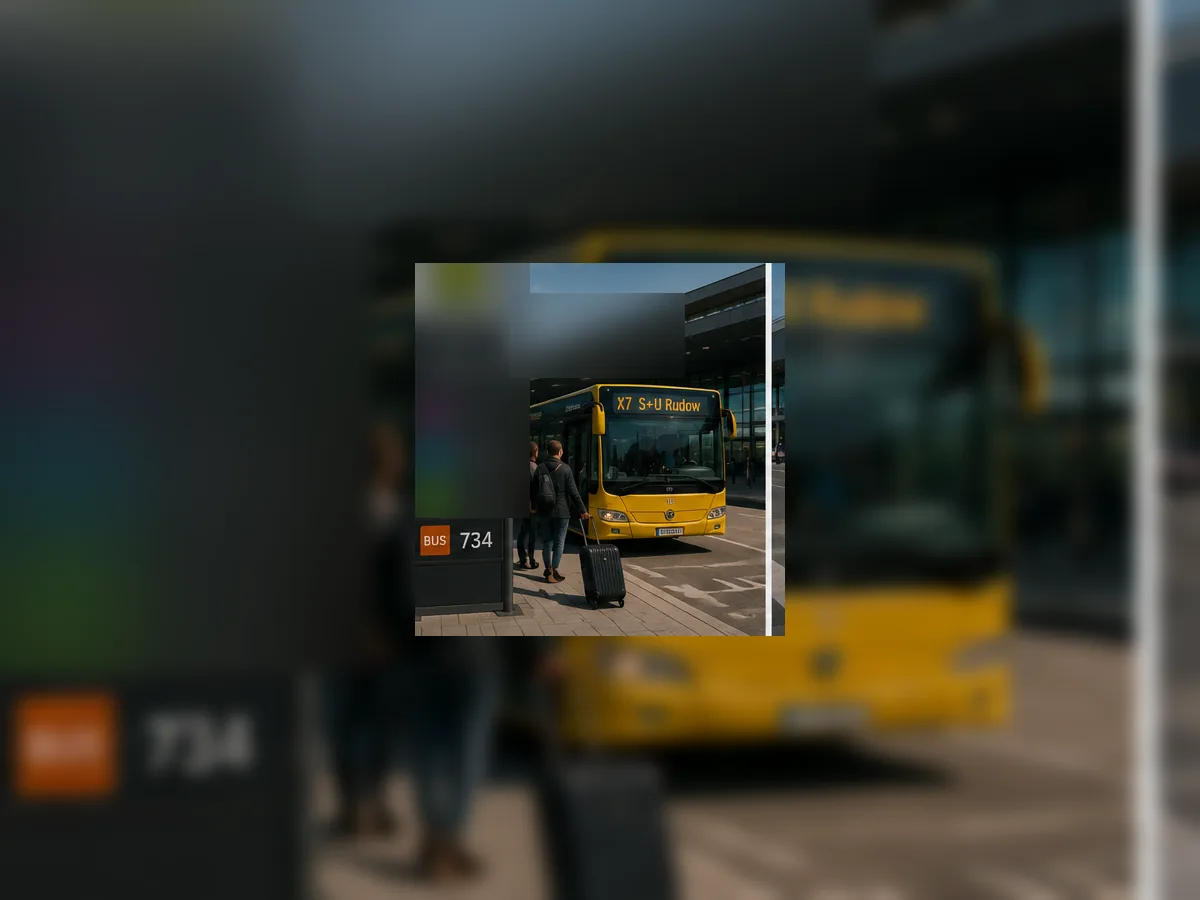
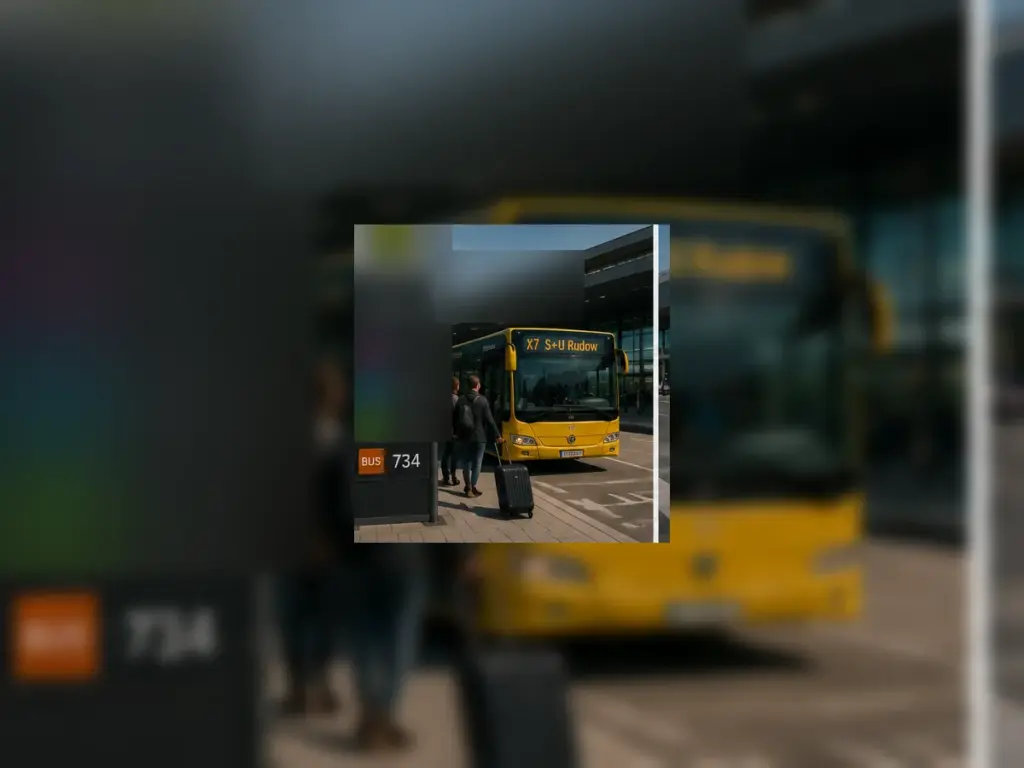
BER public buses connect the airport with nearby transport nodes and selected destinations. Express buses can be useful for passengers connecting to the U-Bahn or travelling to areas not directly served by train.
Bus travel depends on the exact stop, road traffic, frequency, luggage space and onward connection. Check whether the bus stop is practical for your terminal and whether the final destination still needs another transfer.
Express buses X7 and X71
The express buses X7 and X71 connect BER with U-Bahn connections such as Rudow and other parts of Berlin. They are useful when the U-Bahn connection fits the passenger’s route better than rail from the airport station.
These buses can be practical for some districts, but travellers should include waiting time, bus stop location, road traffic and the onward U-Bahn journey. With heavy luggage, a direct road transfer may still be easier.
BER2 bus to Potsdam
The BER2 bus can be useful for travellers heading toward Potsdam. It may be more direct than going through central Berlin, depending on timing and final destination.
Passengers should check the current timetable and exact stop before relying on it. For late arrivals, heavy luggage or group travel, compare the bus with a direct transfer before deciding.
Tickets and fare zones
Public transport from BER usually requires the correct ticket for the route and fare zones used. Passengers should check the required ticket before boarding, validate where required and keep the ticket available during the journey.
Do not assume a city-only ticket is enough for the airport. BER is outside the inner city area, so airport journeys often require a wider fare-zone ticket than short trips inside central Berlin.
Where to buy public transport tickets
Tickets can usually be bought through machines, apps or transport ticket systems. The exact best method depends on the passenger, route and payment method.
If you arrive without mobile data, use airport Wi-Fi where available or buy a ticket at a machine. Save your destination and route before travel so you do not need to plan everything after landing.
For connectivity planning, see BER Airport Wi-Fi Guide.
Public transport after arrival
After arrival, do not go directly to the train or bus plan until you know your real exit time. Passport control, baggage claim, customs, lost luggage, ATMs, currency exchange and terminal walking can all add time.
If you are meeting someone, staying at a hotel or changing transport later, send updates after baggage claim rather than immediately after landing.
For arrival planning, see BER Airport Arrivals Guide.
Public transport before departure
Before departure, public transport planning should work backwards from flight departure time. Include the journey to BER, station or bus stop walking, check-in, baggage drop, security, passport control where relevant and gate walking.
Public transport delays or missed connections can create serious departure stress. If the flight is important or the time window is narrow, add more buffer or choose direct transport.
For departure planning, see BER Airport Departures Guide.
Public transport and check-in
Passengers with checked baggage, special baggage, child equipment, pets or document checks should be especially careful when using public transport to BER. A missed train or bus can reduce the time available for airline formalities.
If you arrive by train or bus, go directly to the correct check-in area before considering cafes, shopping or other stops.
For check-in planning, see BER Airport Check-in Guide and BER Airport Airlines Guide.
Public transport and security
Security control is another reason to avoid cutting public transport timing too close. Even if the train ride is smooth, the terminal process can still take time.
Passengers should include security, possible queues, gate distance and passport control before deciding how late they can arrive by train or bus.
For security planning, see BER Airport Security Control and BER Airport Fast Track Guide.
Public transport and passport control
Passport control affects both arrival and departure timing. Non-Schengen arrivals may reach the station or bus stop later than passengers from Schengen flights. Non-Schengen departures may need extra time after security.
For public transport, this means the safest plan includes border-control buffer. Do not assume that landing time equals train departure time.
For border planning, see Passport Control at BER Airport and EES and ETIAS at BER Airport.
Public transport and baggage
Baggage is often the deciding factor. Public transport is easiest with a backpack or one suitcase. It becomes harder with several suitcases, strollers, sports equipment, musical instruments or group luggage.
If luggage is delayed or missing, do not buy a time-sensitive connection until you know when you can leave the baggage area.
For baggage planning, see BER Airport Baggage Claim Guide and BER Airport Lost Luggage Guide.
Public transport and customs
Customs can delay exit after arrival, especially for passengers with goods, business equipment, large cash amounts or items requiring checks. This can affect train and bus connections.
If customs takes longer than expected, update hotels, drivers or people meeting you before choosing a new connection.
For customs planning, see BER Airport Customs Guide.
Public transport and late-night arrivals
Late-night public transport may still be possible, but frequency, transfers, walking routes, luggage and safety should be considered carefully. A connection that looks acceptable in daytime may feel difficult after midnight.
If you land late with children, heavy luggage or a hotel far from a station, a private transfer may be more comfortable than several public transport changes.
For late-night planning, see Late-Night Arrival at BER Airport.
Public transport and hotels
Public transport works best when the hotel is close to a convenient station or stop. If the hotel is far from the nearest station, the final walk or extra connection may remove the advantage of the train.
Always check the full route from the terminal to the hotel entrance. Airport-to-city travel time alone is not enough.
For hotel planning, see BER Airport Hotels Guide.
Public transport for business travellers
Business travellers may choose public transport when the destination is near a station and timing is flexible. It can be efficient for central locations and light luggage.
For meetings, events, conferences, equipment or formal travel, a direct transfer can be more predictable. Consider whether saving money is worth possible route complexity.
For business services, see BER Airport Business Services Guide.
Public transport for families
Families should check stroller access, lifts, luggage, walking distance, ticket handling and the number of transfers. Public transport can work well, but it requires more planning than a direct door-to-door route.
Parents should prepare snacks, water, chargers, entertainment and backup route information before leaving the airport.
For family travel, see BER Airport Family Services Guide.
Public transport for accessible travel
Passengers with reduced mobility should check station access, lifts, platform routes, bus access, walking distances and assistance needs before choosing public transport.
Public transport may be possible, but a direct transfer can be more comfortable when the final destination is not near an accessible station or when luggage support is needed.
For accessible travel, see BER Airport Accessibility Guide.
Public transport during delays
Delays affect public transport decisions. A delayed arrival can mean missed trains, fewer late-night connections or changed hotel plans. A delayed departure can mean extra waiting at BER but should not lead passengers to leave the secure area without checking airline instructions.
Use flight status and live transport information together. A delayed flight and a delayed train can quickly change the best route.
For delay planning, see BER Airport Flight Delays Guide.
Public transport during cancellations
If a flight is cancelled, public transport may be needed for a hotel, return to Berlin, another airport or a new long-distance connection. Do not buy a new ticket until you know the airline’s next instruction and baggage situation.
If you are tired, travelling with family or carrying luggage, compare the public transport route with a direct transfer before leaving the terminal.
For cancellation planning, see BER Airport Flight Cancellations Guide.
Public transport and flight status
Flight status is essential for choosing public transport after arrival and planning the route to BER before departure. Passengers should check terminal, landing time, baggage situation and disruption notices before committing to a train or bus.
Use the full flight number when checking updates. Destination alone is not enough when several flights serve the same city.
For flight updates, see BER Airport Flights Guide and BER Airport Flight Status Guide.
Public transport and cash
Many ticket systems and transport services support card or app payment, but cash can still be useful as a backup. International passengers should check whether their card works in Germany before relying on it.
If you need cash after arrival, use an ATM or currency exchange only after you understand baggage and exit timing.
For money planning, see BER Airport ATMs Guide and BER Airport Currency Exchange Guide.
Public transport and food stops
Food stops can make public transport timing worse. After arrival, a cafe or restaurant stop may mean missing a train or bus. Before departure, food before security can reduce the buffer needed for check-in and screening.
If public transport timing matters, handle the route first and food second.
For food planning, see BER Airport Cafes Guide and BER Airport Restaurants Guide.
Public transport and shopping
Shopping can add bags, liquids and time. This affects public transport because extra purchases may be difficult to carry through stations, platforms, buses and transfers.
If you plan to use public transport, keep luggage manageable and avoid bulky last-minute purchases.
For shopping planning, see BER Airport Shopping Guide and BER Airport Duty Free Guide.
Public transport vs taxi
Public transport can be cheaper and sometimes faster for station-connected routes. Taxi can be easier for direct travel, luggage, late arrivals, hotels away from rail lines or passengers who do not want transfers.
The choice should depend on the full route, not only the first leg. A train may be fast to the city centre, but the final walk or transfer can make a taxi easier.
Public transport vs private transfer
A private transfer is usually more predictable for families, groups, business travellers, large luggage, late-night arrivals and door-to-door hotel travel. Public transport is usually better for light luggage and flexible travellers with simple station access.
If comfort, timing and luggage space are more important than the lowest price, a direct transfer may be the better option.
For planned airport transfer options, see Airport Transfers from BER Airport, Transfer from BER Airport and Transfer to BER Airport.
How to decide if public transport is right for you
- Choose public transport if your destination is close to a station and luggage is light.
- Choose public transport if your timing is flexible and you are comfortable with transfers.
- Consider taxi or transfer if you arrive late, carry several bags or travel with children.
- Consider taxi or transfer if your hotel is far from a station.
- Consider taxi or transfer if delays, cancellations or business timing make reliability more important.
Common BER public transport mistakes
- Using landing time as the train departure time.
- Forgetting passport control, baggage claim and customs.
- Ignoring the walking route from Terminal 2.
- Buying the wrong fare-zone ticket.
- Choosing a route with too many transfers and heavy luggage.
- Not checking late-night frequency.
- Depending on live internet without saving the route offline.
- Comparing only price instead of the full door-to-door journey.
BER public transport checklist
- Confirm whether your flight uses Terminal 1 or Terminal 2.
- Check whether train, S-Bahn or bus best fits the destination.
- Include walking time from terminal to station or bus stop.
- Check the correct ticket and fare zone.
- Save route and hotel address offline.
- Include baggage, passport control and customs after arrival.
- Include check-in, security and gate walking before departure.
- Compare public transport with taxi or private transfer if luggage or timing is difficult.
FAQ
Is BER Airport connected by public transport?
Yes. BER is connected by Airport Express, regional trains, S-Bahn and buses, with the main railway station below Terminal 1.
Where is the BER train station?
The airport railway station is below Terminal 1. Terminal 2 passengers follow the signposted route between Terminal 2 and the Terminal 1 transport area.
Is public transport from BER good for tourists?
It can be very useful if the hotel is near a station and luggage is light. For families, late arrivals or hotels away from rail lines, a direct transfer may be easier.
Can I take a bus from BER?
Yes. BER has express and local bus connections, including routes that connect with U-Bahn and regional destinations.
Should I choose public transport or private transfer from BER?
Choose public transport for simple station-connected routes and light luggage. Choose a private transfer for direct door-to-door travel, luggage, family comfort, business reliability or late-night arrivals.
Plan your BER public transport or transfer before landing
BER public transport can be efficient, but it works best when the full route is simple and realistic. For passengers who prefer direct door-to-door travel, fixed pickup details, luggage space and a suitable vehicle, use online booking to arrange a BER airport transfer in advance.