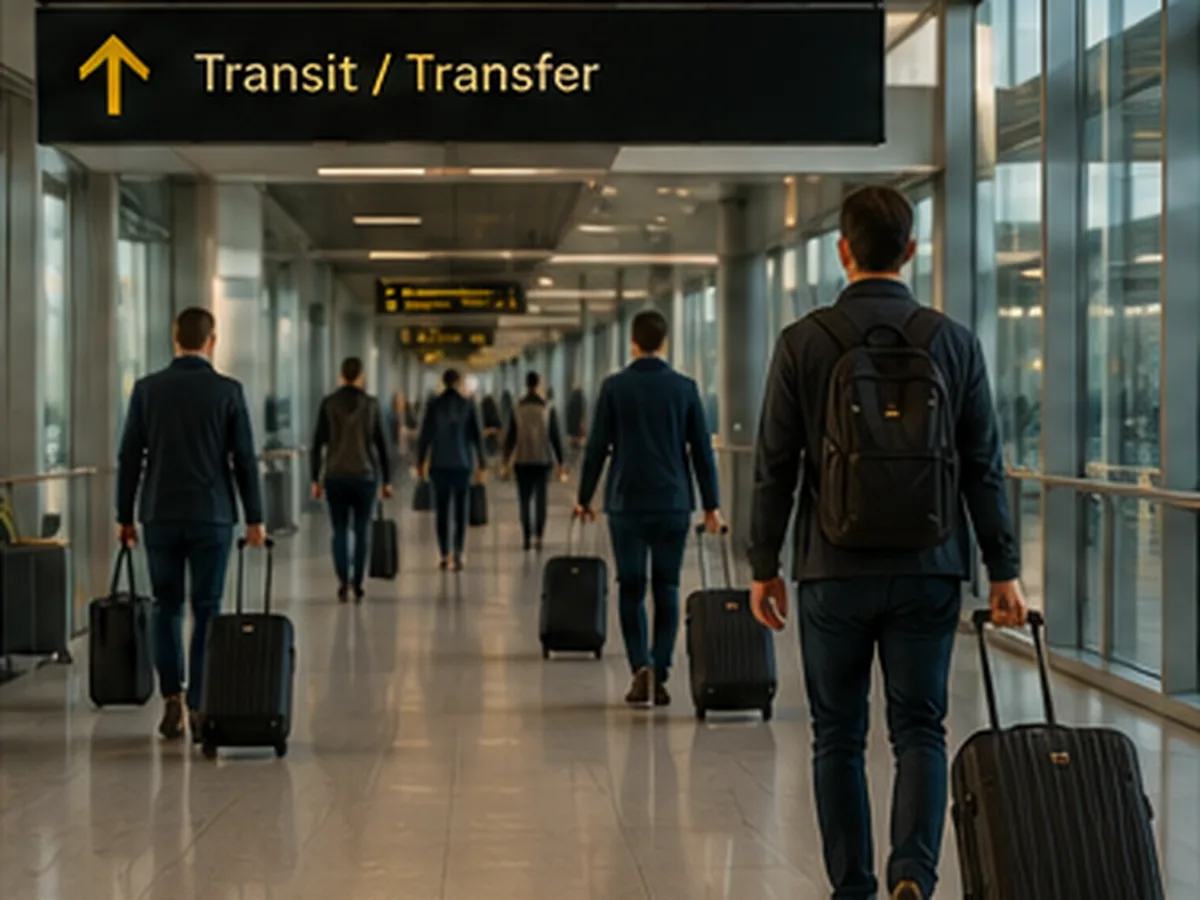
Transit passengers at BER Airport need to understand whether they are staying airside, changing flights on one ticket, or making a self-transfer with separate tickets. These situations are not the same. The airport route can include aircraft exit, passport control, baggage claim, customs, check-in, security, gate walking, food, hotel, public transport or private transfer.
This guide explains how transit passengers can use Berlin Brandenburg Airport more safely. It covers Terminal 1, Terminal 2, self-transfer, flight-to-flight transit, train-to-plane and bus-to-plane connections, checked baggage, security, passport control, Schengen and non-Schengen routes, missed connections, delays, cancellations, airport hotels and ground transport.
Important: transit rules depend on airline, ticket type, route, baggage handling, passport requirements, terminal, Schengen status and operational conditions. Always check your airline, booking and live flight information before relying on a short transit at BER.
Transit passengers at BER Airport at a glance
- Main terminals: Terminal 1 and Terminal 2.
- Terminal walking: the terminals are close, but walking, baggage and security can still add time.
- Train station: below Terminal 1 on Level U2.
- Security: security controls in Terminals 1 and 2 generally give access to all departure gates.
- Main question: are you on one ticket, separate tickets or self-transfer?
- Main risk: baggage claim, check-in, passport control and security can make a short transit unsafe.
Transit, connection and self-transfer
Passengers often use the words transit, connection and self-transfer in the same way, but they can mean different airport processes. A protected connection on one booking is usually planned by the airline. A self-transfer means the passenger creates the connection and carries the risk of time, baggage and re-check-in.
At BER, self-transfer can include flight to flight, train to plane and bus to plane. This can work with enough buffer, but it should not be treated like a simple gate change.
For the detailed connection process, see Connecting Flights at BER Airport, BER Airport Travel Checklist and First Time at BER Airport.
One booking vs separate tickets
If both flights are on one booking, the airline may transfer baggage and protect the onward journey if the first flight is delayed. If the flights are on separate tickets, the onward airline may treat you as a normal departing passenger and may not protect you if the first journey is late.
Separate tickets require a much larger buffer. You may need baggage claim, customs, check-in, baggage drop, security, passport control and gate walking.
Terminal 1 transit passengers
Terminal 1 is the main reference point for many BER services: arrivals, departures, check-in, security, baggage claim, lounges, food areas, shops, airport hotel access, taxi ranks and the train station connection.
If your transit stays within Terminal 1 and baggage is checked through, the process can be easier. If you need to collect baggage and check in again, allow much more time.
For orientation, see BER Airport Terminal 1 Guide, BER Airport Layout Guide and BER Airport Map Guide.
Terminal 2 transit passengers
Terminal 2 is close to Terminal 1, but transit passengers should still allow walking time. If you arrive in one terminal and depart from the other, follow current signs and flight information.
If your next journey begins by train or you arrive by train for a flight, remember that the airport station is below Terminal 1 on Level U2. Terminal 2 passengers need extra walking time from the station route.
For Terminal 2 planning, see BER Airport Terminal 2 Guide and BER Terminal 1 vs Terminal 2.
Flight-to-flight transit at BER
Flight-to-flight transit can be simple or complex depending on the booking. If baggage is checked through and the passenger can remain in the secure area, the connection is easier. If the passenger must enter the public area, collect baggage and check in again, the transit becomes a full airport departure process.
Always confirm with the airline whether baggage is checked through and whether you need to pass security or passport control again.
Train-to-plane transit at BER
Train-to-plane passengers should treat the train arrival as the start of the airport process, not as the end of the journey. From the airport station on Level U2, passengers still need terminal walking, check-in or bag drop, security and possibly passport control.
Do not build a tight connection using the last possible train. Add time for platform movement, lifts, luggage and Terminal 2 walking if relevant.
For rail planning, see BER Airport Train Guide, BER Airport Train Station Guide, FEX Airport Express at BER Airport, BER Airport Regional Trains and BER Airport S-Bahn Guide.
Bus-to-plane transit at BER
Bus-to-plane transit can work if the bus schedule leaves enough buffer. Long-distance buses, shuttle buses and local buses can be delayed by traffic, luggage loading or stop timing.
Passengers using bus-to-plane transit should know the walking distance from the bus stop to the terminal and should not plan the airport process too tightly.
For bus and public transport, see BER Airport Bus Guide, BER Airport Shuttle Bus Guide and BER Airport Public Transport Guide.
Checked baggage for transit passengers
Checked baggage is the biggest difference between a protected connection and a self-transfer. If baggage is checked through to the final destination, the transit can be faster. If not, you need to collect baggage, leave arrivals and check the bag again.
This process can take much longer if the bag is delayed, oversized or delivered separately from normal suitcases.
For baggage planning, see BER Airport Baggage Claim Guide, BER Airport Lost Luggage Guide and BER Airport Transport with Luggage.
Large luggage during transit
Large luggage, sports equipment, musical instruments, strollers, boxes or trade fair material make transit slower. Oversized baggage may need special collection and special check-in handling.
If you have large luggage, avoid short separate-ticket transit. A missed onward flight can become expensive and stressful.
For large baggage, see BER Airport with Large Luggage and BER Airport Luggage Storage.
Security during transit
Transit passengers may or may not need security again. If you stay in the secure area, you may continue to the next gate. If you collect baggage, enter the public area or self-transfer, you usually need security again.
At BER, security controls in Terminal 1 and Terminal 2 generally lead to all departure gates. Still, follow current gate information and signs.
For screening details, see BER Airport Security Control and BER Airport Fast Track Guide.
Passport control for transit passengers
Passport control depends on the route. Schengen travel is usually simpler, while non-Schengen arrivals or departures can require additional passport control. Some transit passengers may need to leave the secure area and pass security again depending on terminal and route.
Keep passport, visa, residence permit, entry documents and onward boarding pass accessible until the next flight is complete.
For border planning, see Passport Control at BER Airport and EES and ETIAS at BER Airport.
Customs during transit
Customs can matter if you collect baggage, enter the customs area or carry goods that need declaration. Self-transfer passengers with checked baggage should pay special attention because baggage claim can bring them through the arrivals process before the next check-in.
If carrying business goods, samples, tax-free goods or declared items, keep documents accessible and add extra time.
For customs and tax-free planning, see BER Airport Customs Guide and BER Airport VAT Refund Guide.
How much transit time is safe?
There is no single safe transit time for every passenger. The answer depends on ticket type, baggage, terminal, route, passport control, security, walking speed, children, mobility needs and delay risk.
Self-transfer passengers should plan a much wider buffer than one-ticket connecting passengers. If you need to collect baggage and check in again, treat the onward flight like a new departure from BER.
For timing context, see How Early Should You Arrive at BER Airport? and Best Time to Leave for BER Airport.
Transit after a delayed arrival
If the first journey is delayed, check immediately whether the next flight is protected. On one booking, the airline may reroute you. On separate tickets, the onward airline may treat the missed flight as your responsibility.
Keep all boarding passes, delay messages, booking references and receipts.
For delay planning, see Delayed Flight at BER Airport and BER Airport Flight Delays Guide.
Transit after cancellation
If part of the journey is cancelled, ask the airline how the whole itinerary changes. This includes rerouting, refund, baggage, hotel, meals and onward transport.
Separate-ticket passengers should check both bookings because one cancellation does not automatically protect the other ticket.
For cancellation planning, see Cancelled Flight at BER Airport and BER Airport Flight Cancellations Guide.
Missed transit or missed onward flight
If you miss an onward flight at BER, contact the airline immediately. Ask whether the ticket can be rebooked, whether later segments are still valid and what happens to checked baggage.
If the missed flight is caused by a delay on one booking, the airline may have rerouting responsibilities. If it is separate tickets, you may need to buy or change the onward flight yourself.
For recovery steps, see Missed Flight at BER Airport.
Transit with children
Transit with children needs extra time for walking, toilets, food, baby changing, stroller handling and security preparation. A short self-transfer with children and checked baggage is risky.
Keep snacks, documents, chargers and comfort items accessible until the next boarding is complete.
For family travel, see BER Airport with Children, BER Airport with a Baby and BER Airport Family Services Guide.
Transit for senior travellers
Senior travellers should plan transit around walking distance, lifts, seating, toilets, baggage and assistance. A transit that looks possible on paper may be uncomfortable in practice.
If reduced mobility assistance is needed, arrange it with the airline before travel day and confirm how it applies to the transfer route.
For senior and accessible travel, see BER Airport for Senior Travellers, BER Airport Accessibility Guide and BER Airport Disabled Travellers Guide.
Transit for business travellers
Business travellers should avoid tight self-transfer transit when meetings, laptops, samples, trade fair material or checked baggage are involved. A missed onward flight can affect hotel, meeting time and client schedules.
Keep business documents, laptop, charger and essential work items in hand baggage if airline rules allow.
For business travel, see BER Airport for Business Travellers and BER Airport Business Services Guide.
Food, Wi-Fi and charging during transit
Food, coffee, shopping and work should come after the next urgent step is clear. For transit passengers, that step may be baggage claim, check-in, security, passport control or the next gate.
Charge phone early and save boarding passes offline. Transit often requires airline messages, maps, hotel updates, driver contact and payment.
For airport services, see BER Airport Food Guide, BER Airport Cafes Guide, BER Airport Wi-Fi Guide and BER Airport Charging Stations.
Airport hotel for transit passengers
If the next flight is the following day or the transit fails, an airport hotel can reduce stress. This is useful with children, senior travellers, business trips, late arrival or large luggage.
Before booking a hotel yourself, check whether the airline provides accommodation or instructions if the disruption is airline-related.
For hotel planning, see BER Airport Hotels Guide, BER Airport Hotels for Late Arrivals and BER Airport Hotels for Early Flights.
Taxi and private transfer for transit passengers
If transit fails or if your next journey is outside the terminal, ground transport may become important. Taxi or private transfer can take you to a hotel, city address, meeting, home address or later return trip to BER.
Do not book pickup until baggage, rebooking and the next destination are clear. If you already booked a transfer, update the provider as soon as possible.
For road transport, see BER Airport Taxi Rank Guide, BER Airport Taxi Rank Guide, Airport Transfers from BER Airport, Transfer to BER Airport and Transfer from BER Airport.
Common mistakes by transit passengers at BER
- Assuming self-transfer is protected like one booking.
- Not checking whether baggage is through-checked.
- Ignoring passport control on non-Schengen routes.
- Choosing a short transit with checked or large luggage.
- Stopping for food or shopping before the next urgent step.
- Not confirming whether later flight segments remain valid.
- Booking pickup before baggage and rebooking are clear.
- Relying on the last possible train, bus, taxi or ride app.
Best checklist for transit passengers at BER
- Check whether your journey is one booking or self-transfer.
- Confirm Terminal 1 or Terminal 2 for each flight.
- Confirm whether checked baggage is transferred or must be collected.
- Check whether security or passport control is required again.
- Keep passport, boarding passes, visa documents and phone accessible.
- Go directly to the next required step.
- Use live flight status and airport monitors.
- Contact the airline immediately after delay, cancellation or missed onward flight.
- Use online booking if fixed airport transfer after a transit disruption is safer than last-minute transport.
FAQ
Can transit passengers stay airside at BER?
Sometimes. It depends on ticket type, route, terminal, baggage handling and whether passport control or security is required again. Self-transfer passengers often need to enter the public area and check in again.
Do transit passengers need security again at BER?
Some do and some do not. If you collect baggage, self-transfer or enter the public area, you usually need security again before the next departure.
Do transit passengers need passport control at BER?
Passport control depends on Schengen and non-Schengen routing. Non-Schengen arrivals or departures can require additional passport control and more time.
Is self-transfer at BER safe?
Self-transfer can work with enough buffer, but it is riskier than a protected one-ticket connection. Checked baggage, passport control, security and terminal walking all add time.
What if my transit at BER fails?
Contact the airline immediately, check rebooking and baggage status, then decide whether you need hotel, taxi, public transport or private transfer.
Plan BER transit and transfer together
Transit passengers at BER Airport have the smoothest journey when ticket type, baggage, terminal, security, passport control, timing and backup transport are planned together. For travellers who need a hotel, city address or later return to BER after a transit disruption, use online booking to arrange a BER airport transfer in advance.