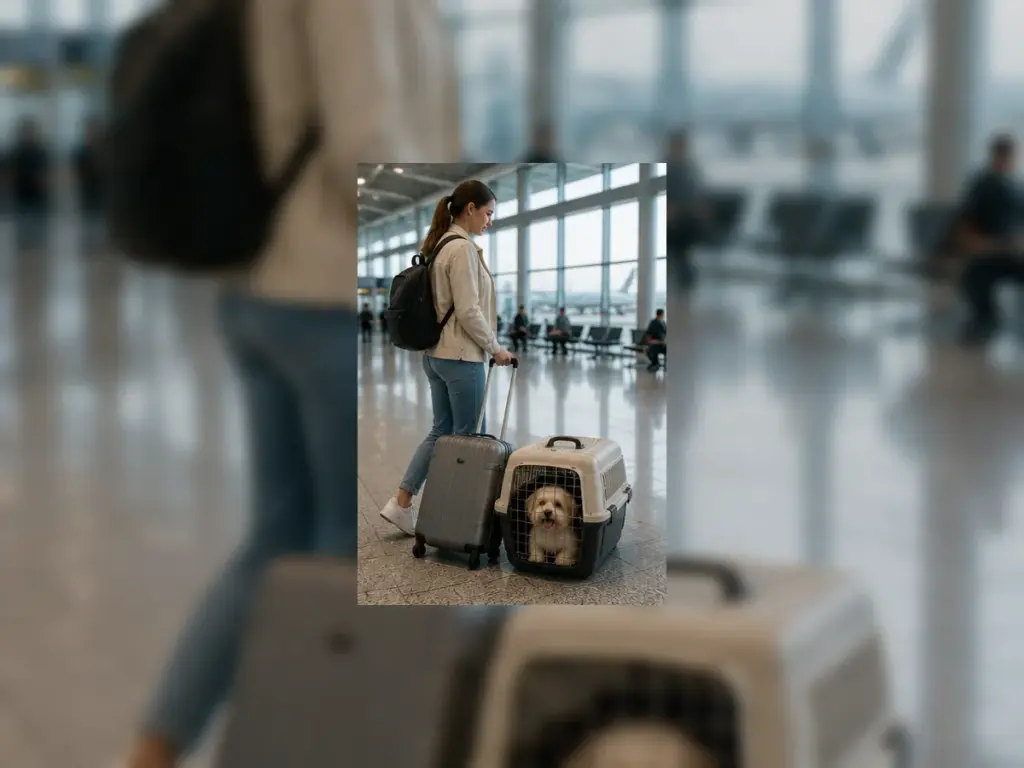
This BER Airport Pet Travel Guide explains how to travel through Berlin Brandenburg Airport with dogs, cats and other permitted animals. Pet travel needs more preparation than ordinary baggage because airline rules, destination entry requirements, vaccination status, pet passport, microchip, transport box, terminal timing and onward transport all matter.
At BER, the passenger is responsible for preparing the animal correctly before the travel day. The most important steps are to contact the airline, consult a veterinarian, check destination rules, prepare the correct transport bag or box, carry the pet passport and plan enough time for check-in, security, oversized baggage, arrivals and transfer.
Important: this guide is practical airport information, not veterinary, legal or airline advice. Airline pet rules, destination entry requirements, vaccination rules, transport box standards, check-in times, fees and customs rules can change. Always confirm directly with your airline and veterinarian before travelling with an animal.
BER Airport pet travel at a glance
- Airport: Berlin Brandenburg Airport Willy Brandt
- IATA code: BER
- Key preparation: register the pet with the airline before travel
- Documents: pet passport, vaccination record and microchip identification are essential
- Transport: bring a suitable transport bag or transport box; BER does not rent or sell them
- Terminal rule: animals in the terminal must be on a leash, in a transport box or otherwise secured appropriately
- Oversized baggage: animals not travelling in the cabin go to oversized baggage after check-in
Can you travel with pets at BER Airport?
Yes, passengers can travel with pets at BER when the airline, destination country and animal transport rules allow it. The airport journey must be planned around the airline’s pet policy and the animal’s welfare.
BER is not the place to solve pet travel requirements at the last minute. If the animal is not registered correctly, lacks documents, lacks a suitable transport box or does not meet entry requirements, travel can be refused or delayed.
For general airport preparation, see BER Airport Departures Guide, BER Airport Check-in Guide and BER Airport Airlines Guide.
Register your pet with the airline
Before travelling with a pet, register the animal with your airline. Pet transport prices and rules vary depending on airline, destination, animal type, size, weight and whether the pet travels in the cabin or cargo hold.
Do not arrive at BER with an unregistered animal and expect the airport to arrange transport. Airline approval is the central part of the process.
Consult your veterinarian before travel
Before travelling with your pet, consult a veterinarian. Check whether the animal is healthy enough to fly, whether vaccinations are valid, whether the pet passport is complete and whether the microchip information is correct.
Older animals, anxious animals, animals with medical conditions and certain breeds may require extra caution. The veterinarian can help decide whether flying is appropriate.
For travel health context, see BER Airport Medical Services and BER Airport Pharmacy.
Pet passport, vaccination and microchip
A pet passport with recorded vaccinations is mandatory for many pet travel situations. Unique identification is ensured by a microchip that stores relevant information.
Passengers should check the vaccination status early, not on the day of travel. Some vaccinations or entry requirements may need time before they become valid for travel.
Destination entry requirements
Animal entry requirements depend on the destination country. Travelling within the European Union is different from travelling to or from non-EU countries.
If you are importing or re-importing a pet from a non-EU country, registration and document or identity checks may be required. Non-compliance can create serious consequences for the animal and passenger.
For border and customs planning, see Passport Control at BER Airport, EES and ETIAS at BER Airport and BER Airport Customs Guide.
Transport bag or transport box
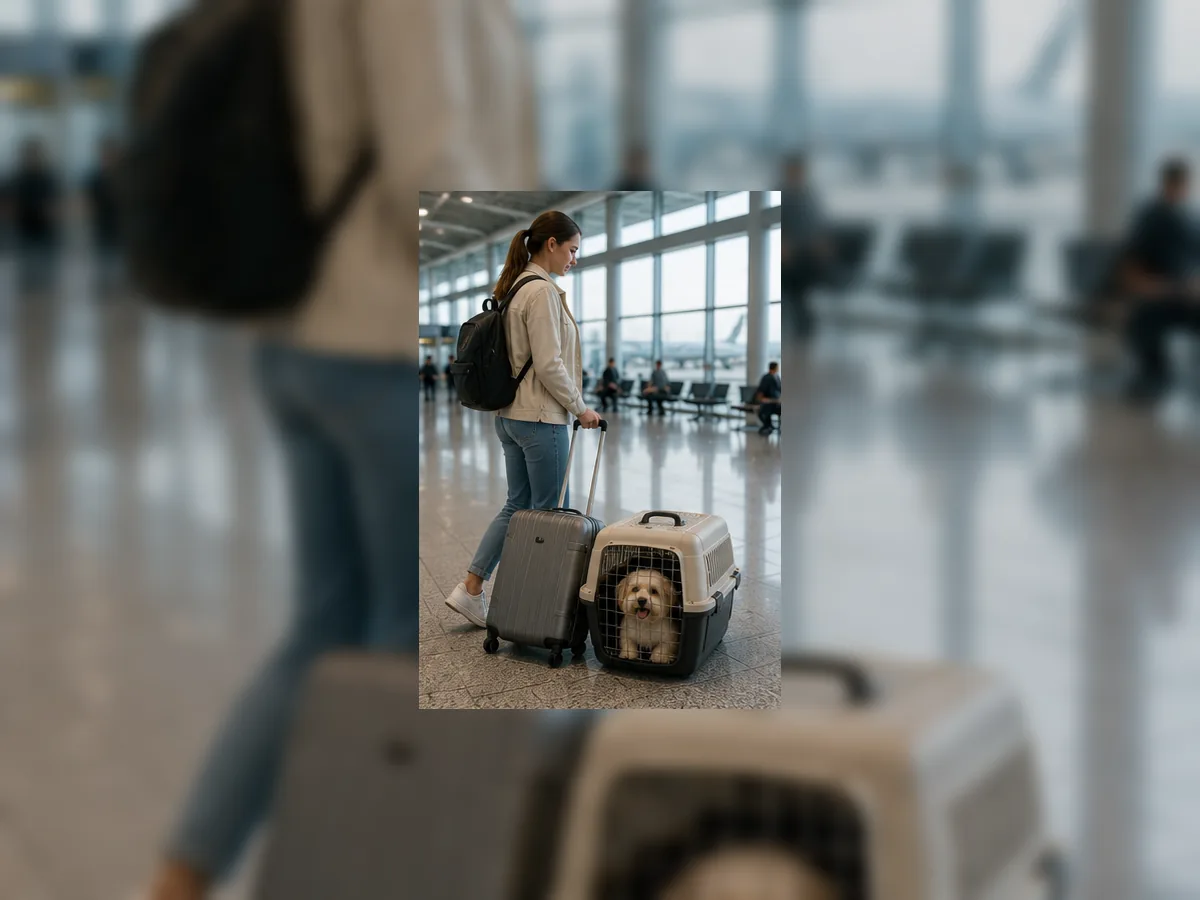
Bring a suitable transport bag or transport box for the animal. BER does not rent or sell transport bags or boxes. The animal must have sufficient space in line with animal welfare expectations.
Buy the transport container before the travel day and let the pet get used to it. A pet that has never been inside the transport box may become stressed at the airport.
Cats and small dogs in the cabin
Cats and small dogs may be allowed in the cabin in a transport bag, depending on the airline. Size and weight limits vary by airline, so the passenger must confirm the exact rule before travel.
Cabin travel does not remove the need for registration, documents, suitable bag, security procedure and destination entry checks.
Animals in the cargo hold
Animals that are not allowed to travel in the cabin may travel in the heated cargo hold of the aircraft, depending on airline and route. The transport box should be prepared with important information such as animal name, address and telephone number.
Passengers should confirm all cargo hold requirements with the airline before arrival at BER.
Acclimatising the pet before travel
Acclimatisation is important. Familiarise the pet with the transport container before the flight. Let the animal spend time in the box at home, with a blanket or familiar object if appropriate.
The goal is to make the airport and aircraft experience less stressful for the animal. A calm pet is easier to manage at check-in, security and boarding.
Pets in the terminal
At BER, animals in the terminal must be on a leash, in a transport box or otherwise secured in a manner appropriate to the species. This rule protects the animal, other passengers and airport operations.
Do not let pets move freely in the terminal, food areas, check-in queues, baggage claim or transport areas.
For terminal orientation, see BER Airport Terminal 1 Guide, BER Airport Terminal 2 Guide and BER Terminal 1 vs Terminal 2.
Departure day with a pet
On departure day, check your airline’s check-in and boarding times. BER advises passengers travelling with animals to go to security immediately after check-in.
Pet travel can take longer than ordinary travel. Allow extra time for airline checks, baggage, pet presentation, oversized baggage, documents, security and walking to the gate.
For timing and screening context, see BER Airport Security Control and BER Airport Fast Track Guide.
Check-in with pets
At check-in, passengers may need to present the pet, documents, transport bag or box and booking details. Airline staff may check that the pet is registered and that the transport container meets requirements.
Keep pet passport, booking documents, contact details and any veterinary papers ready. Do not pack them deep inside checked luggage.
Oversized baggage counter in Terminal 1
After check-in, animals that are not allowed to travel in the cabin are taken to the oversized baggage counter in Terminal 1. Passengers should have the pet passport and booking documents ready.
This step can be emotional and time-sensitive. Prepare the animal, transport box, water, food, blanket and contact information before reaching the counter.
For luggage context, see BER Airport Transport with Luggage and BER Airport Baggage Claim Guide.
Water, food, toys and blanket
Before handing over a pet in a transport box, double-check that the animal has enough water and food according to airline rules. Toys and a blanket can help relax the pet.
Do not add items that the airline does not allow. The animal’s comfort must fit the airline’s safety and handling requirements.
Pets and security control
Security control with a pet depends on how the animal is transported and airline procedure. Passengers should follow staff instructions and keep the animal secured.
Prepare bags, electronics, liquids and pet documents before reaching the screening point. A disorganised security process can increase stress for the animal.
Pets and Terminal 1
Terminal 1 is the main reference point for many pet travel steps at BER, including check-in, oversized baggage, public areas, taxi ranks, airport hotels and the airport train station.
Passengers travelling with pets should know whether their flight uses Terminal 1 or Terminal 2 and where the required check-in and baggage steps take place.
For orientation, see BER Airport Layout Guide and BER Airport Map Guide.
Pets and Terminal 2
Terminal 2 has a smaller service footprint than Terminal 1. If your flight uses Terminal 2, confirm the airline’s pet check-in process and whether any Terminal 1-side steps are required.
Do not assume that a normal hand-luggage route is enough when travelling with an animal.
Arriving at BER with pets
After arriving at BER with a pet, the passenger may need to complete passport control, baggage claim, customs or animal entry checks depending on route and origin. Timing can be longer than a normal arrival.
If someone is picking you up, tell them not to time pickup from scheduled landing. The realistic pickup time is after the passenger, pet and luggage are ready to leave the terminal.
For arrival planning, see BER Airport Arrivals Guide, Late-Night Arrival at BER Airport and BER Airport Night Transport.
Non-EU pet entry
Pet entry from non-EU countries requires special attention. Document checks or identity checks may be required, and non-compliance can lead to serious consequences.
Passengers should confirm all official rules before the trip and avoid relying on airport staff to fix missing paperwork after arrival.
Pet travel and customs
Customs and animal entry requirements can affect the arrival route. The goal is not only to protect the traveller, but also to prevent animal disease risks.
If customs or animal checks take longer than expected, update the hotel, driver or family member before they wait in a pickup area.
Pet travel with luggage
Pet travel adds complexity to luggage. You may have ordinary suitcases, pet documents, transport box, food, water, blanket, leash and cleaning items.
Keep the essential pet documents and immediate supplies accessible. Do not bury them in checked luggage.
For luggage planning, see BER Airport Lost Luggage Guide.
Pet travel and airport hotels
Airport hotels can be useful before early flights or after late arrivals, but pet policies must be confirmed directly with the hotel. Do not assume that every hotel accepts pets or that every room category is suitable.
If travelling with a pet, confirm pet acceptance, fees, room rules, check-in timing and transport route before booking.
For hotel planning, see BER Airport Hotels Guide, BER Airport Hotels for Early Flights and BER Airport Hotels for Late Arrivals.
Pet travel before early flights
Before an early flight, prepare the transport box, pet passport, water, food, blanket, leash, booking documents and transfer timing the evening before.
Early morning is not the right time to solve missing documents, unfamiliar transport box problems or unclear airline rules.
For early airport access, see BER Airport Early Morning Transport.
Pet travel after late arrivals
After a late arrival, pets and passengers may be tired. Terminal services, public transport and hotel check-in can be less convenient at night.
A direct taxi or pre-arranged transfer may be easier than managing a pet, transport box and luggage on a complicated late-night route.
For night planning, see BER Airport Hotels for Late Arrivals.
Pet travel during flight delays
Flight delays are difficult with pets because water, food, stress and timing become more important. Keep airline instructions visible and stay close enough to respond when boarding or handling information changes.
If a driver or hotel is waiting, update them early. Pet travel delays can be longer than ordinary passenger delays.
For disruption planning, see BER Airport Flight Delays Guide and BER Airport Flight Status Guide.
Pet travel during cancellations
A cancelled flight with a pet can create hotel, rebooking, animal comfort and transport problems. Handle the pet’s welfare first, then airline instructions, baggage, hotel and transfer.
Do not accept a replacement flight or overnight plan before checking whether the animal can be transported under the new conditions.
For cancellation planning, see BER Airport Flight Cancellations Guide.
Pet travel and food areas
Food areas are not a place for pets to move freely. Animals should remain secured by leash, transport box or appropriate method while in the terminal.
If you need food before departure or after arrival, choose a practical stop that does not stress the animal or delay the airline process.
For food planning, see BER Airport Food Guide, BER Airport Restaurants Guide and BER Airport Cafes Guide.
Pet travel and family travel
Travelling with both children and pets requires extra planning. Parents may need baby items, stroller, pet documents, pet food, luggage and transport at the same time.
Do not build a schedule that depends on everything going perfectly. Allow extra time for security, toilet stops, pet handling and baggage claim.
For family planning, see BER Airport Family Services Guide, BER Airport Family Areas and BER Airport Baby Changing Rooms.
Pet travel and accessibility
Passengers with reduced mobility who also travel with a pet should plan both assistance and animal transport early. Mobility needs, pet box size, luggage and transport can become difficult together.
If the animal is an assistance animal, confirm airline and airport procedures before the travel day.
For accessibility planning, see BER Airport Accessibility Guide and BER Airport Disabled Travellers Guide.
Pet travel and Wi-Fi
Wi-Fi helps passengers contact the airline, veterinarian, hotel, driver or family during the airport journey. It is especially useful during delays, cancellations or late arrivals.
Save pet documents, hotel address, transfer details and airline confirmation offline so they remain available without mobile data.
For connectivity planning, see BER Airport Wi-Fi Guide and BER Airport SIM Cards.
Pet travel and phone charging
A charged phone is important when travelling with a pet. You may need airline messages, veterinary documents, hotel communication, driver contact, payment, maps and flight updates.
Bring a powerbank and cable, especially for long waits or late arrivals.
For device power planning, see BER Airport Charging Stations.
Taxi from BER with pets
Taxi can be useful after arrival with a pet, transport box and luggage. The official taxi ranks are in front of Terminal 1 on Level E0.
Not every taxi driver or vehicle may be suitable for every pet situation, especially with large transport boxes. Be ready to explain the animal and luggage clearly.
For taxi planning, see BER Airport Taxi Rank Guide.
app-based ride services with pets
app-based ride services can be less predictable with pets because vehicle suitability, driver acceptance, pickup point and luggage space may vary.
Do not book until the passenger, pet, transport box and luggage are ready to move to the pickup point. If the animal or box is large, a pre-arranged transfer can be safer.
For ride app planning, see BER Airport Taxi Rank Guide.
Private transfer with pets
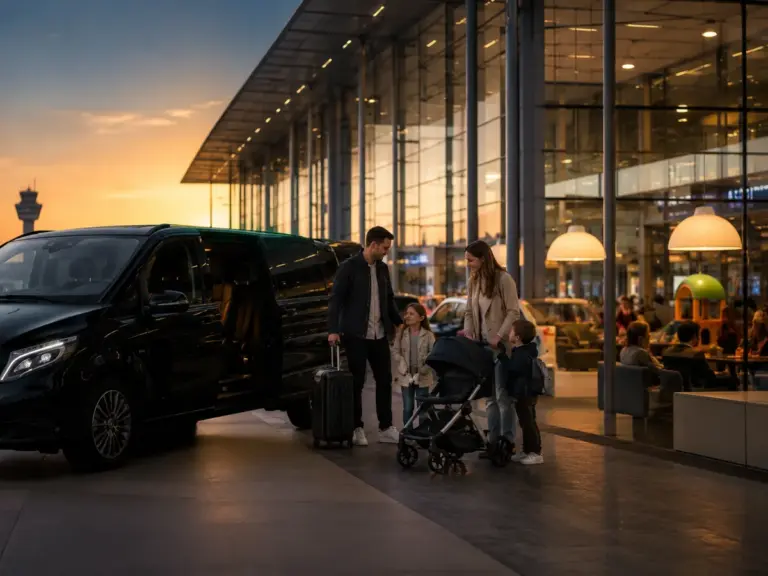
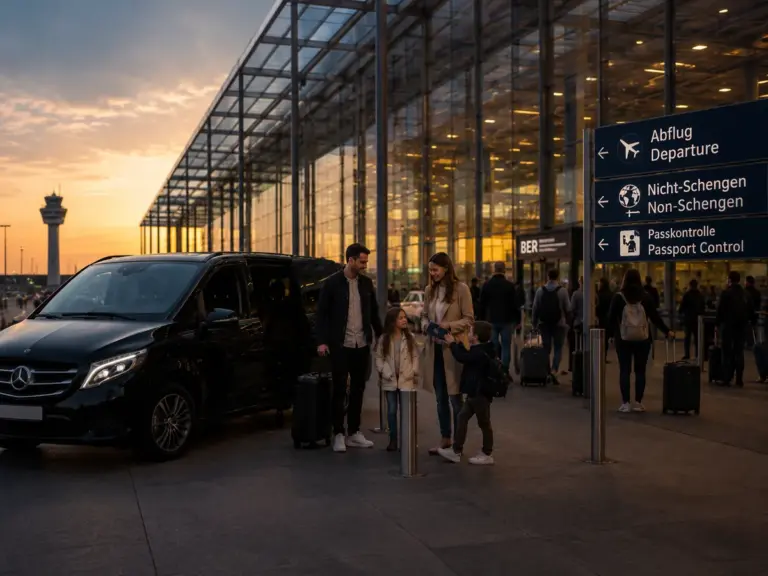
A private transfer can be the simplest option when travelling with pets because pickup time, vehicle size, luggage space and pet details can be arranged in advance.
When booking, clearly state that you are travelling with an animal, the animal type, transport box size, luggage count and whether extra space is needed.
For planned airport transport, see Airport Transfers from BER Airport, Transfer from BER Airport and Transfer to BER Airport.
Train travel with pets
The airport train station is under Terminal 1 on level U2. Train can work with pets if the animal, luggage and route are manageable.
Before choosing train, check public transport pet rules, ticket needs, muzzle or leash rules, crowd level, final station and hotel walking distance.
For rail planning, see BER Airport Train Guide and BER Airport Train Station Guide.
Public transport with pets
Public transport can be practical for small pets in transport bags, but it becomes harder with a large animal, cargo box, children or several bags.
If the route has multiple changes or a long final walk, taxi or private transfer may be more realistic.
For public transport planning, see BER Airport Public Transport Guide, BER Airport Bus Guide, FEX Airport Express at BER Airport, BER Airport Regional Trains and BER Airport S-Bahn Guide.
Pet travel and parking
If someone is dropping off or picking up a passenger with a pet, timing matters. Short-stay areas are not suitable for long pet handling, repacking or document checks.
Prepare the animal and transport box before entering drop-off or pickup areas.
For parking and pickup planning, see BER Airport Parking Guide, BER Airport Kiss & Fly Guide, BER Airport Pick-up Areas and BER Airport Drop-off Areas.
Car rental with pets
Car rental with a pet requires enough space for the transport box, luggage and safe animal handling. Check rental rules and vehicle size before choosing this option.
If the pet is stressed after a flight, a direct transfer to the hotel may be better than collecting a rental car immediately.
For rental planning, see BER Airport Car Rental Guide.
Payment and receipts
Pet travel can involve extra airline fees, hotel fees, taxi or transfer costs, parking charges and possible document or veterinary expenses. Keep payment methods and receipts organised.
For business or relocation trips, save receipts and pet transport documents together.
For money planning, see BER Airport ATMs Guide and BER Airport Currency Exchange Guide.
Pet travel mistakes to avoid
- Arriving at BER without registering the pet with the airline.
- Forgetting the pet passport, vaccination record or microchip requirements.
- Buying the transport box too late for the animal to get used to it.
- Assuming BER rents or sells transport boxes.
- Letting the pet move freely in the terminal.
- Not allowing time for oversized baggage in Terminal 1.
- Booking taxi, private transfer or transfer before the pet and luggage are ready.
- Ignoring non-EU entry requirements and customs checks.
Best pet travel plan for BER
- Contact the airline before booking or immediately after booking.
- Consult a veterinarian and check vaccination status.
- Prepare pet passport and microchip documentation.
- Buy a suitable transport box early and acclimatise the pet.
- Keep booking documents and pet papers accessible.
- Bring water, food, a blanket and allowed comfort items.
- Plan oversized baggage timing if the pet does not travel in the cabin.
- Use online booking if a fixed pet-friendly transfer is safer than last-minute transport.
FAQ
Can I travel with a pet through BER Airport?
Yes, if the airline, destination country and animal transport rules allow it. Register the pet with the airline and prepare documents before travel.
Can I buy or rent a pet transport box at BER?
No. Passengers must bring a suitable transport bag or box. Transport bags and boxes are not rented or sold at BER Airport.
Can cats and small dogs travel in the cabin?
Cats and small dogs may be allowed in the cabin in a transport bag, depending on airline size and weight rules. Confirm with the airline before travel.
Where do pets go if they cannot travel in the cabin?
After check-in, animals not travelling in the cabin are taken to the oversized baggage counter in Terminal 1. Have pet passport and booking documents ready.
Can pets move freely in the terminal?
No. Animals in the terminal must be on a leash, in a transport box or otherwise secured in a species-appropriate way.
Plan pet travel and transfer together
Pet travel at BER works best when airline registration, documents, transport box, terminal route, luggage and onward transport are planned together. For travellers who prefer fixed pickup details, luggage space and door-to-door travel after arrival or before departure, use online booking to arrange a BER airport transfer in advance.